
2026 Feb-2026 May
A Root Among the Voice
Intro
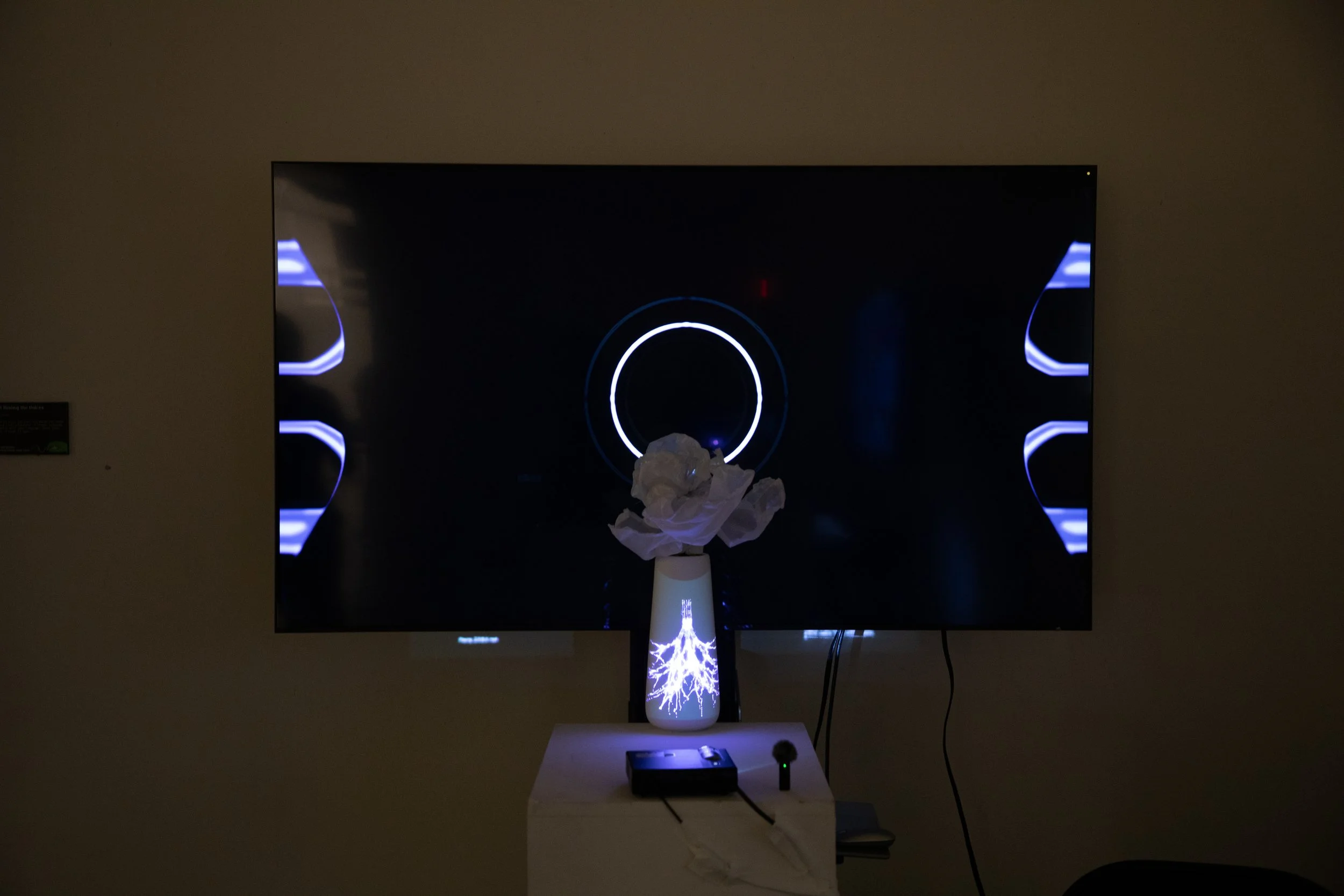
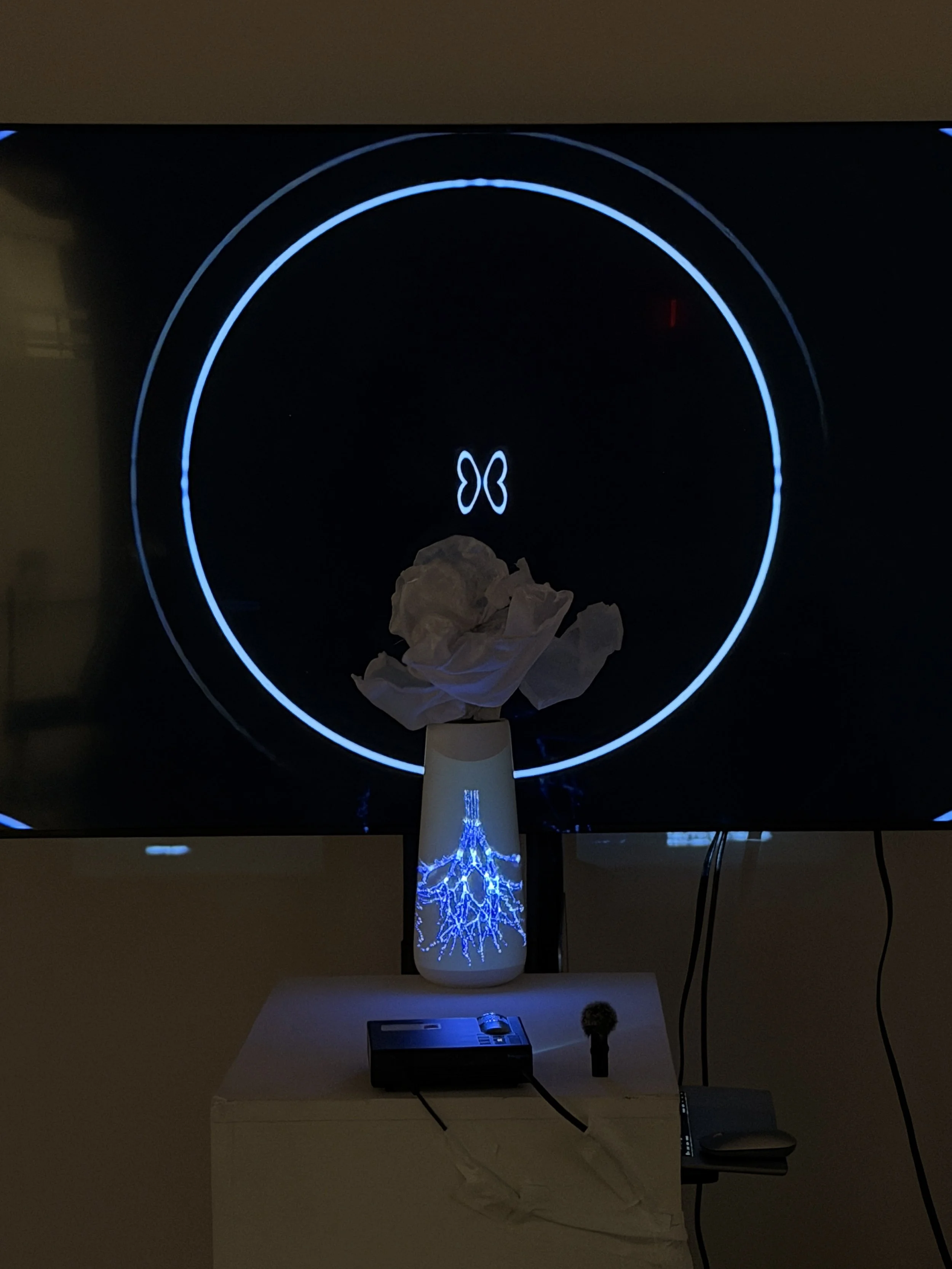
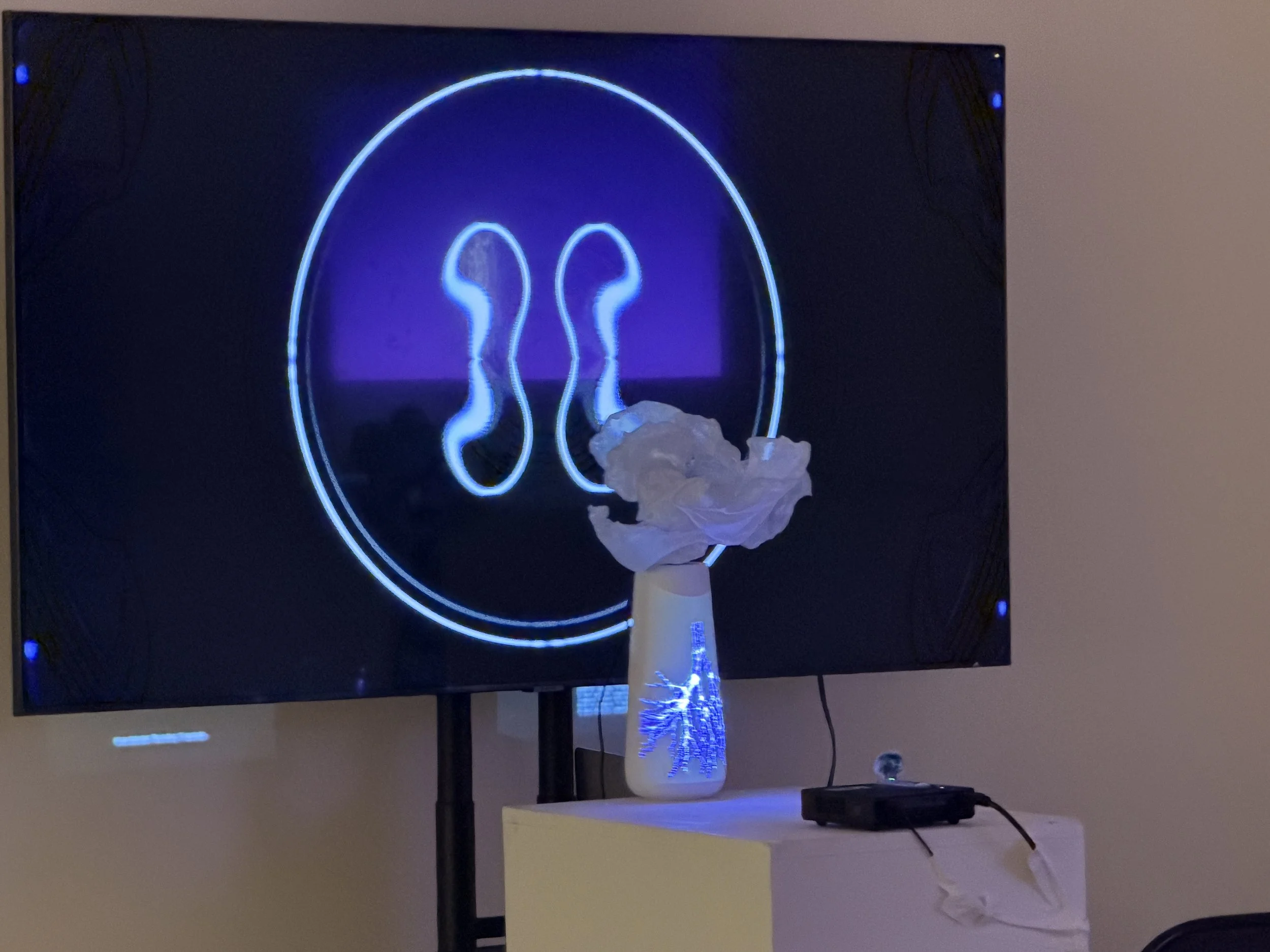
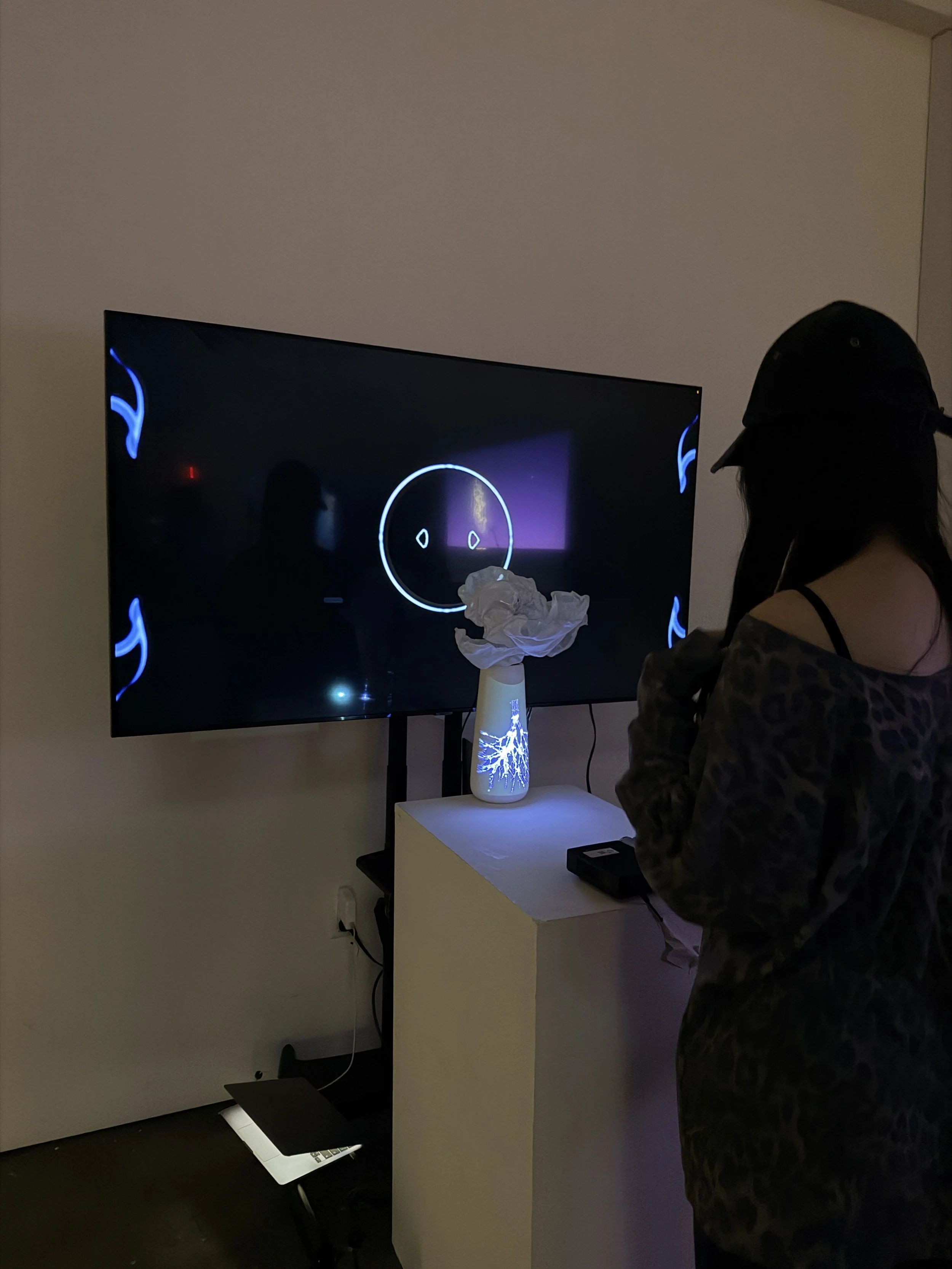
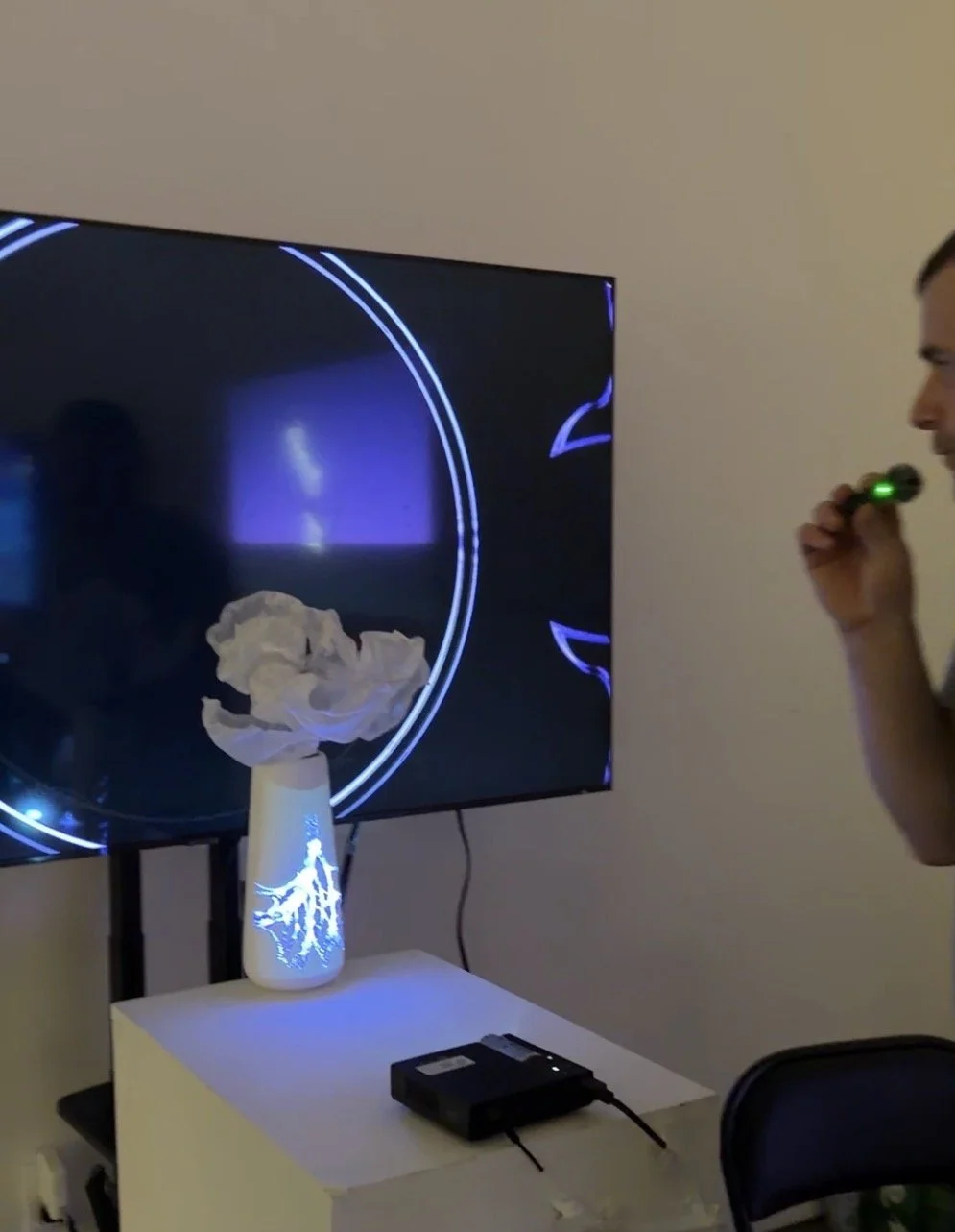
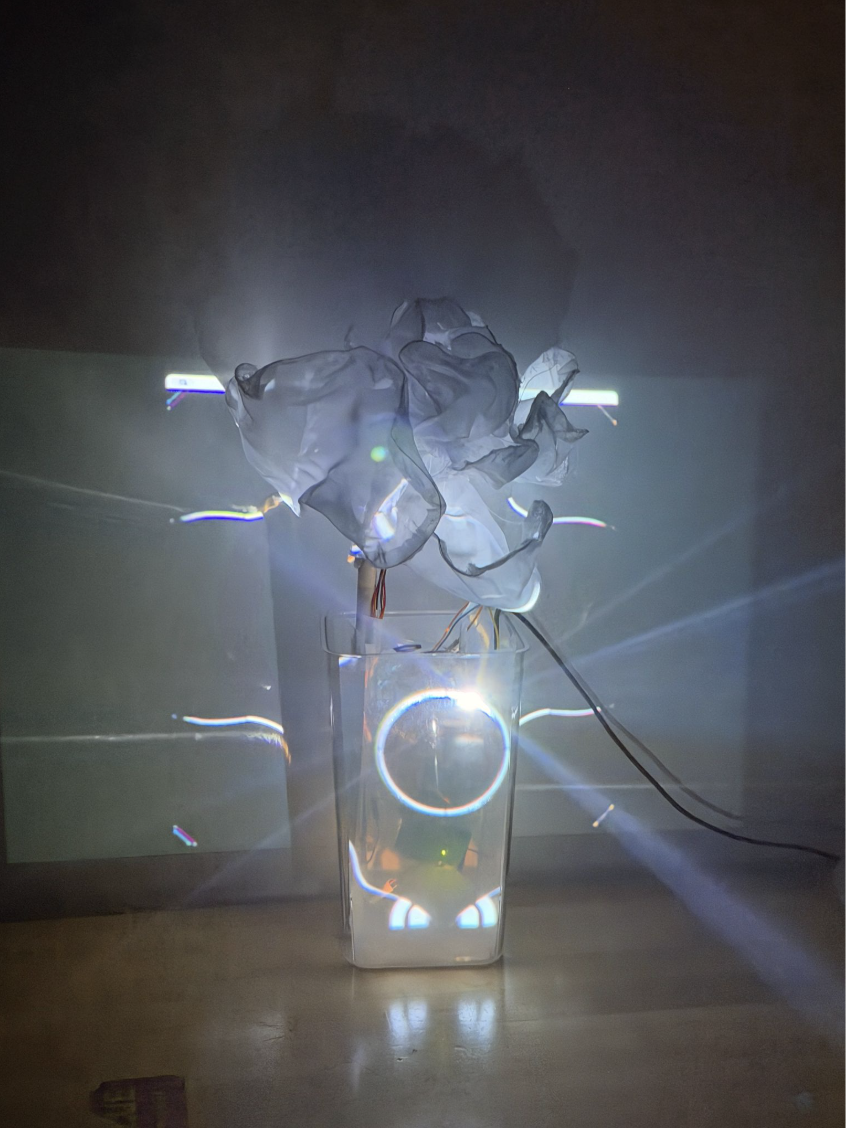
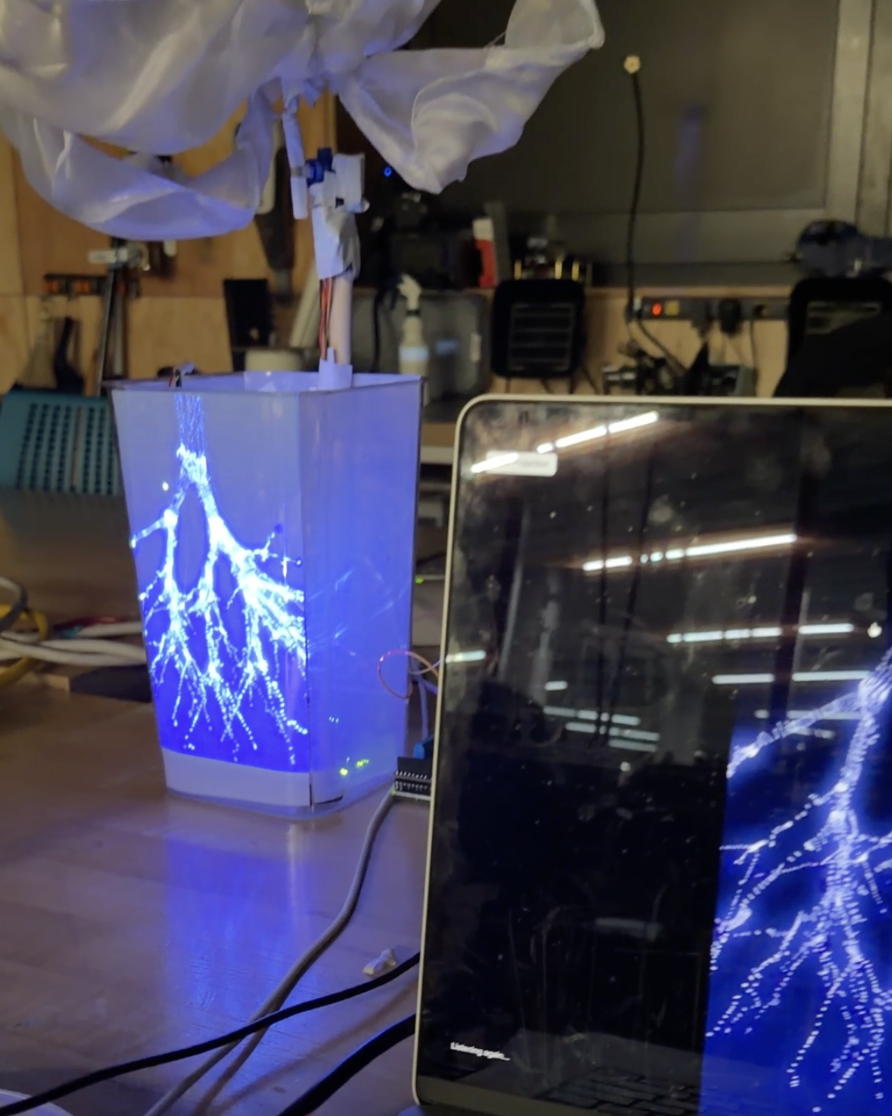
This installation explores how words can shape personal growth and inner character. A flower listens and responds based on your voice. The roots grow, pause, or retreat in sync.
Material
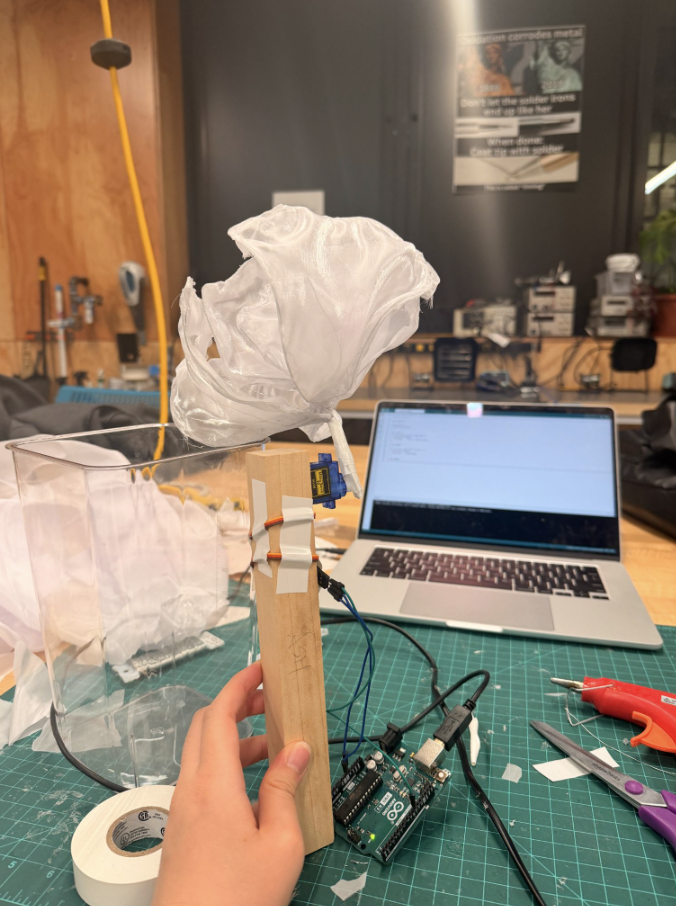
Organza, wood, Arduino, Web Serial, API-based voice analysis, generative projection.
Application
Emotional visualization, trauma recovery, and guided therapeutic interventions for children with autism.
Exhibition Documentation
Behavioral Logic and Evaluation Criteria
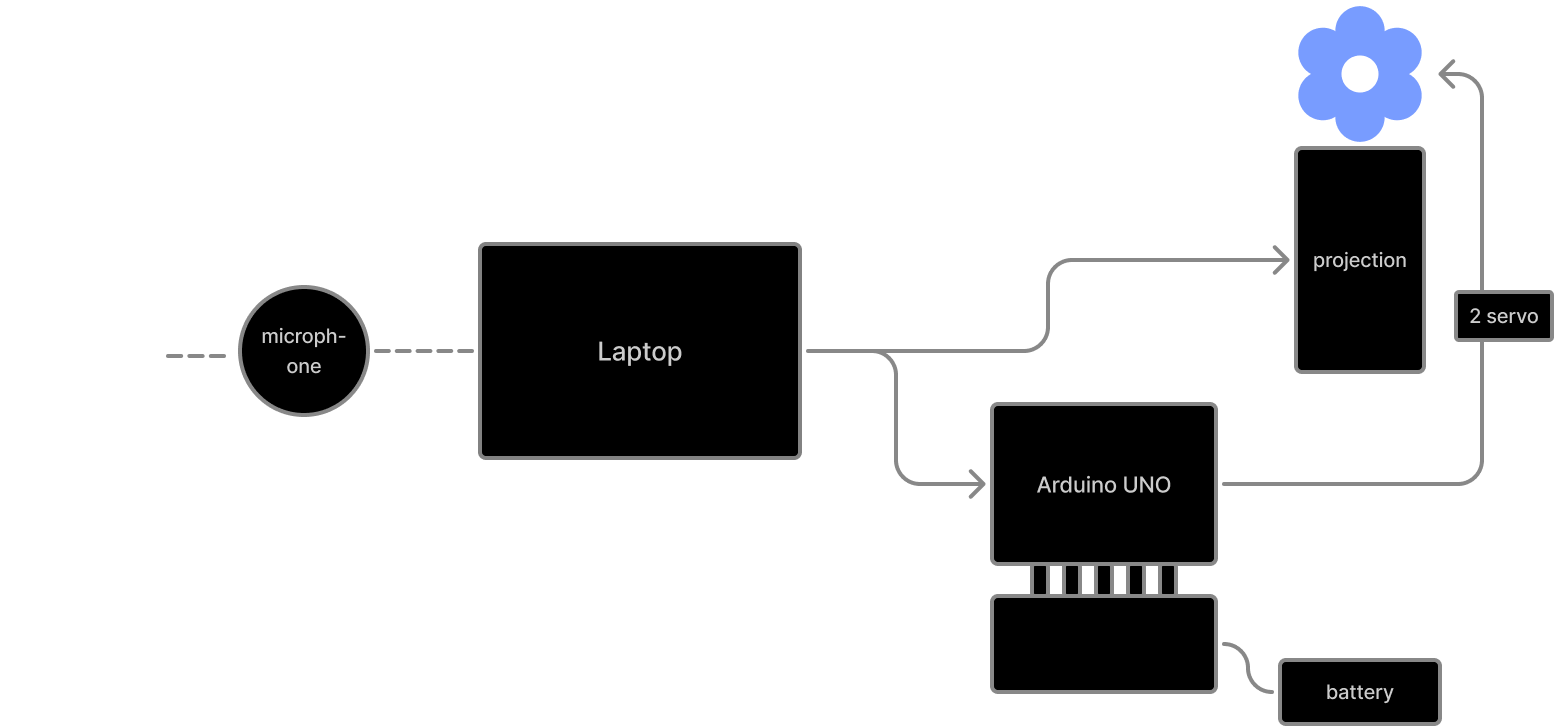
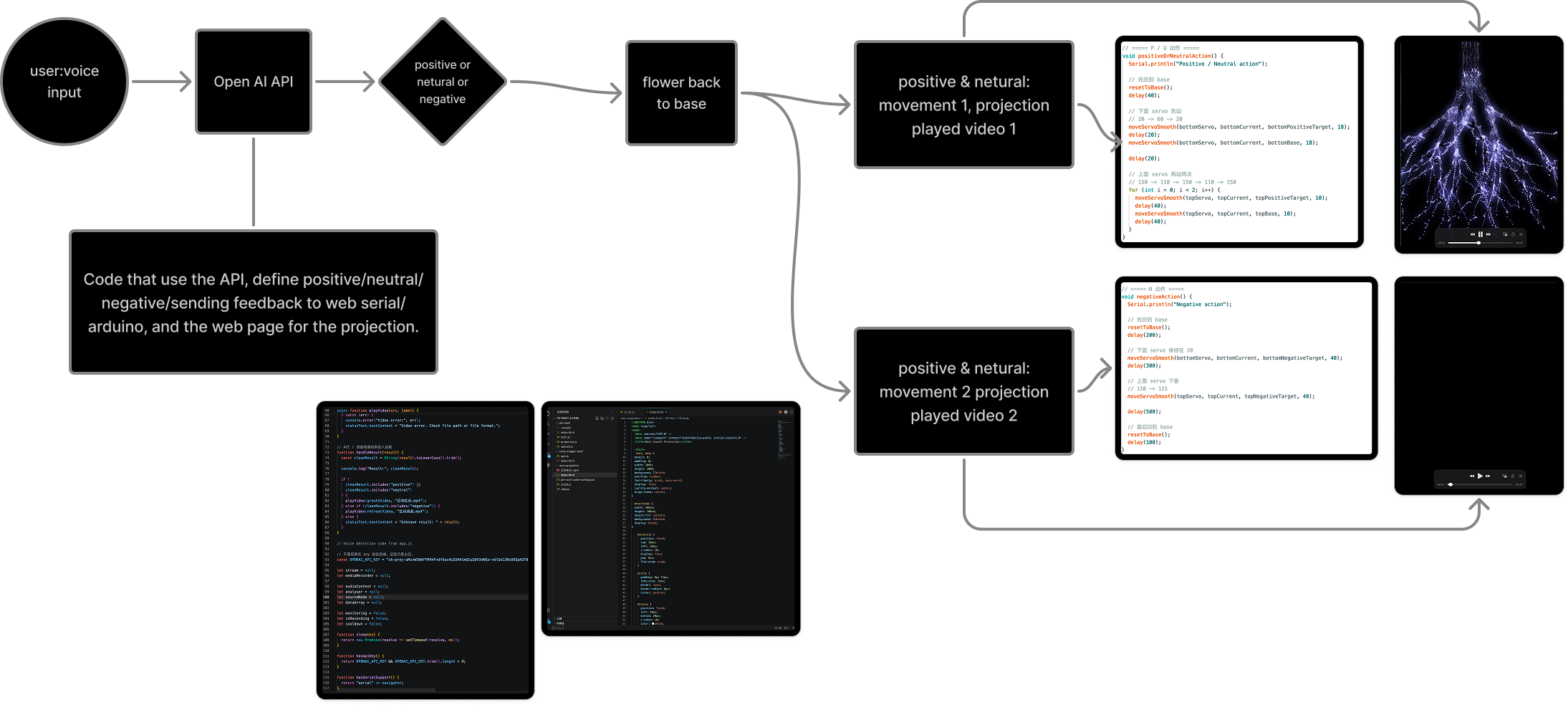
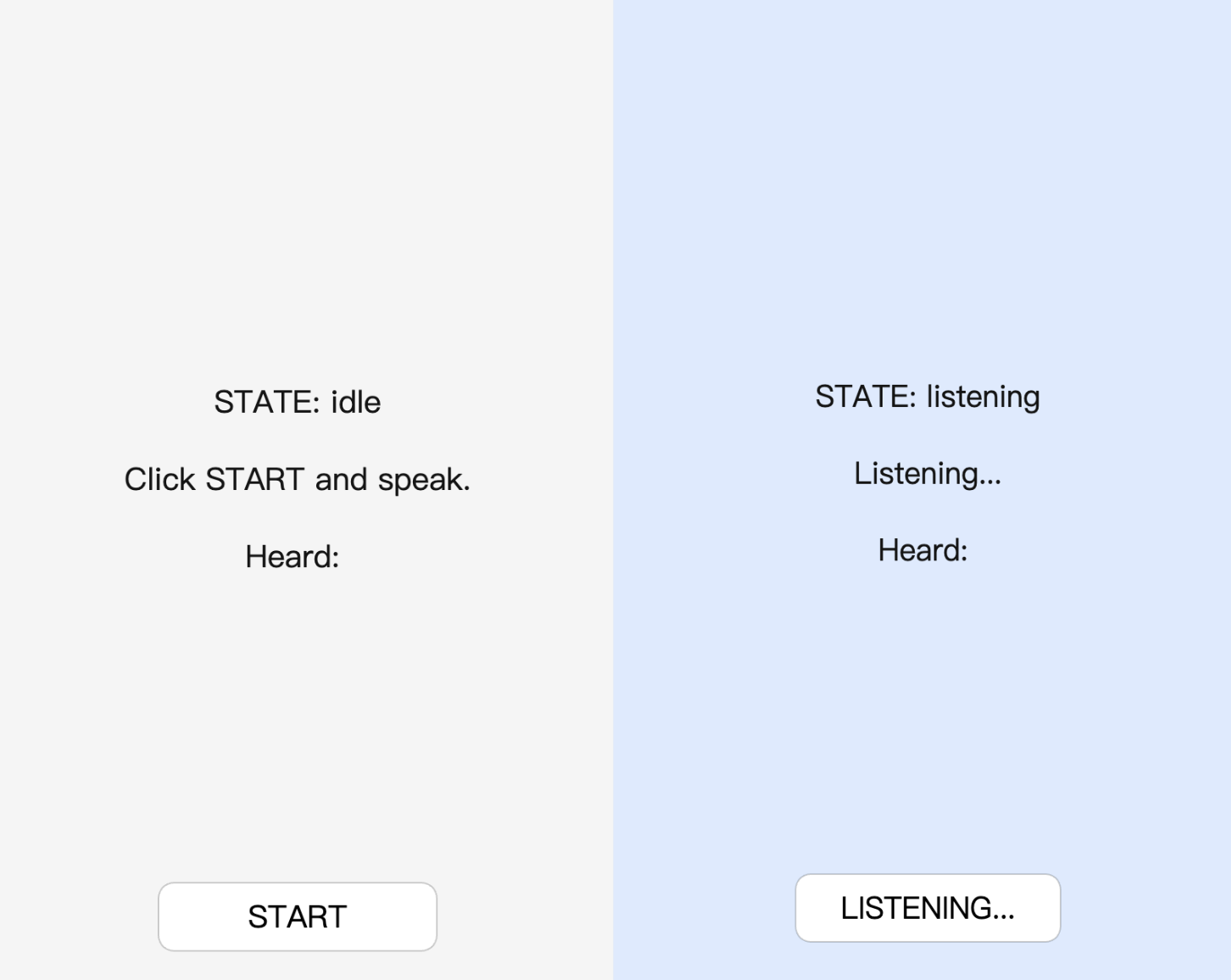
The system uses an AI-powered sentiment analysis pipeline to translate speech into physical expression. Voice input is captured through a microphone and sent to an API, where the spoken content is classified into one of three emotional categories: positive, neutral, or negative.
Positive or neutral → Happy state: Servo Action 1 opens or lifts the flower.
Negative → Sad state: Servo Action 2 lowers or closes the flower.
An Arduino receives the classification result and controls the servos, transforming the AI’s digital interpretation into an immediate physical gesture. In simple terms, the system listens to what the user says, understands its emotional tone, and allows the flower to respond through movement.
System Flow:
Voice Input → Speech Processing → AI Sentiment Classification → Arduino Control Signal → Servo-Driven Flower Expression
Happy State
Sad State
Appendix
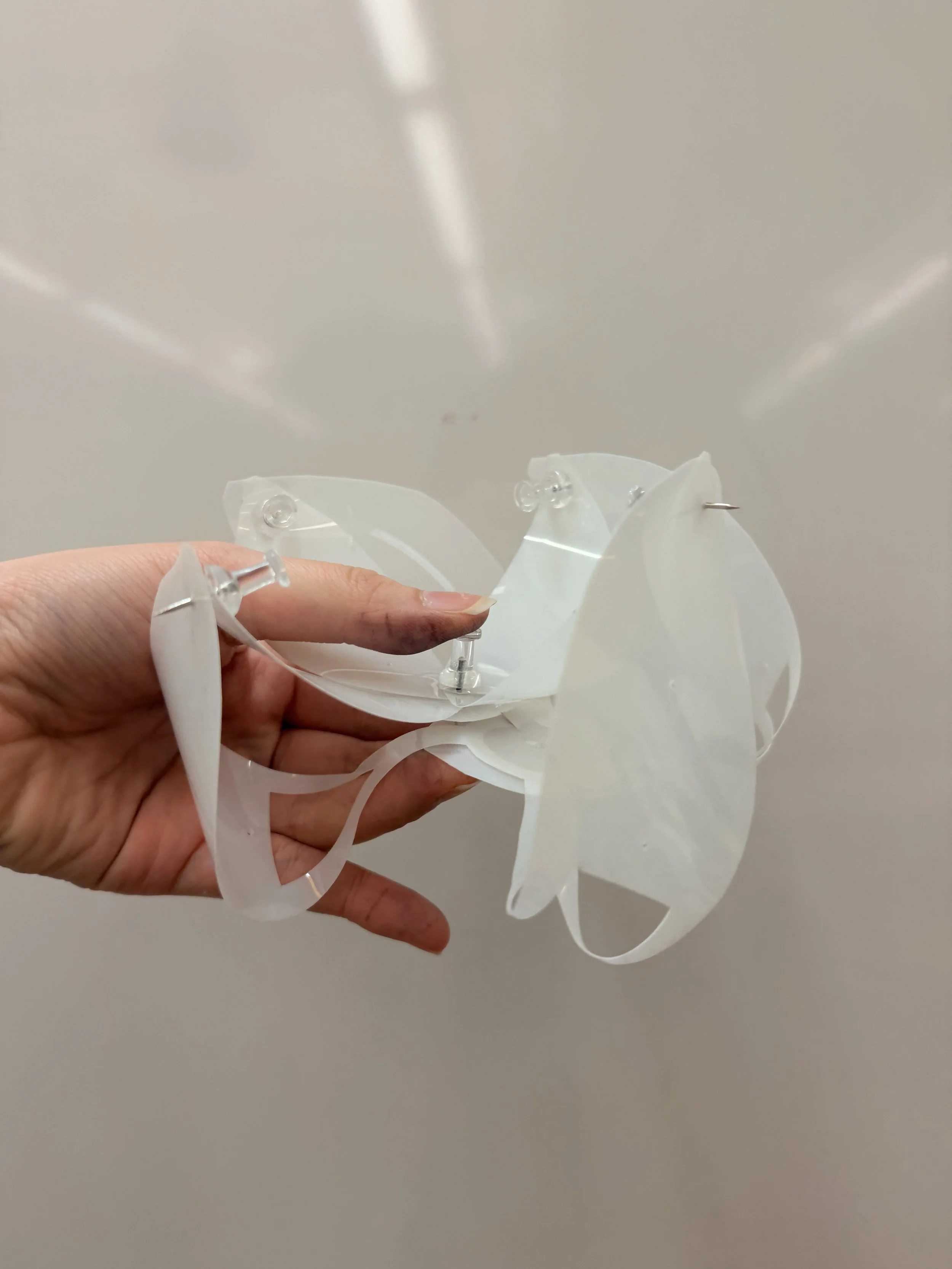
Material & Structural Experiments
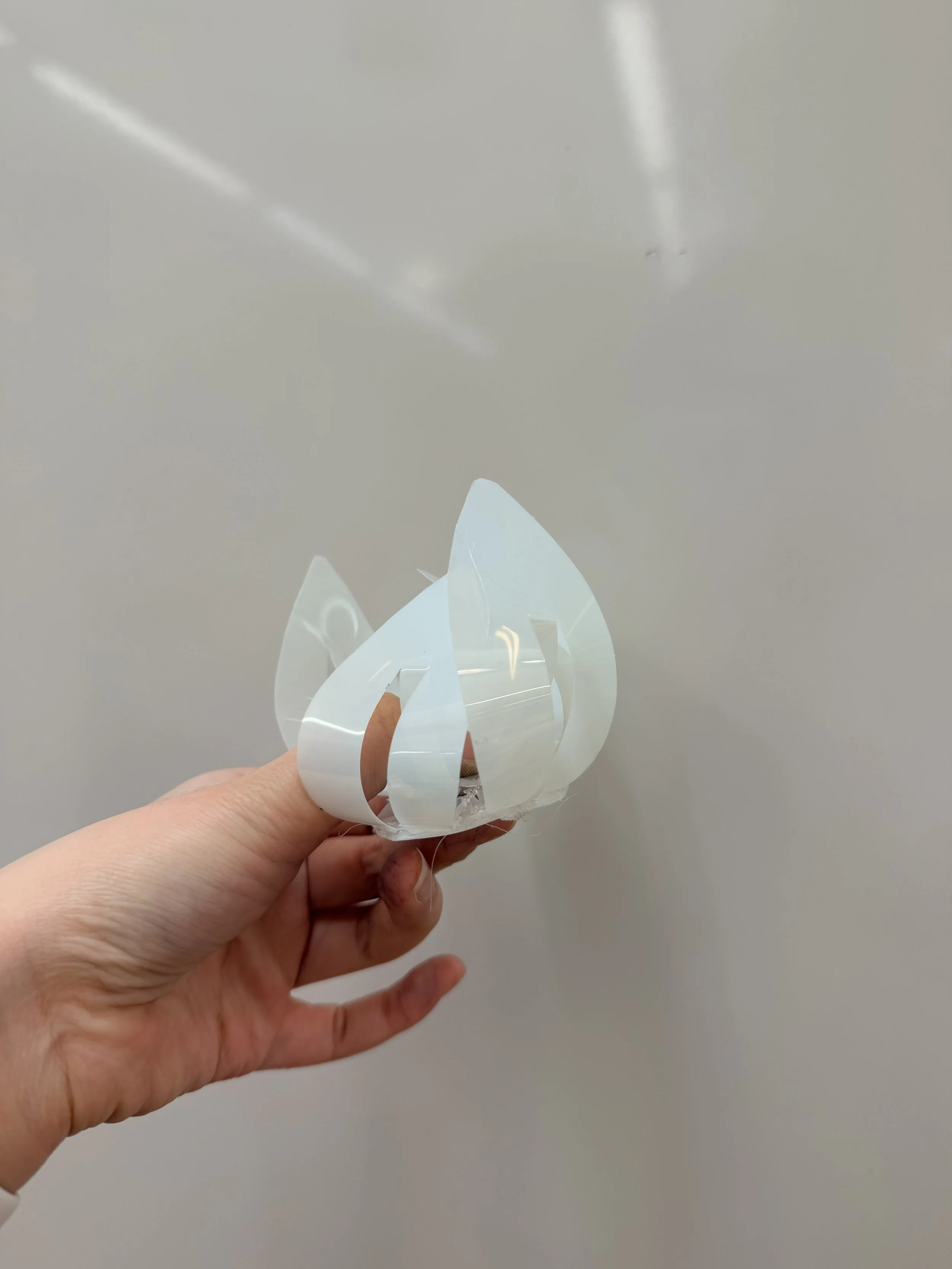
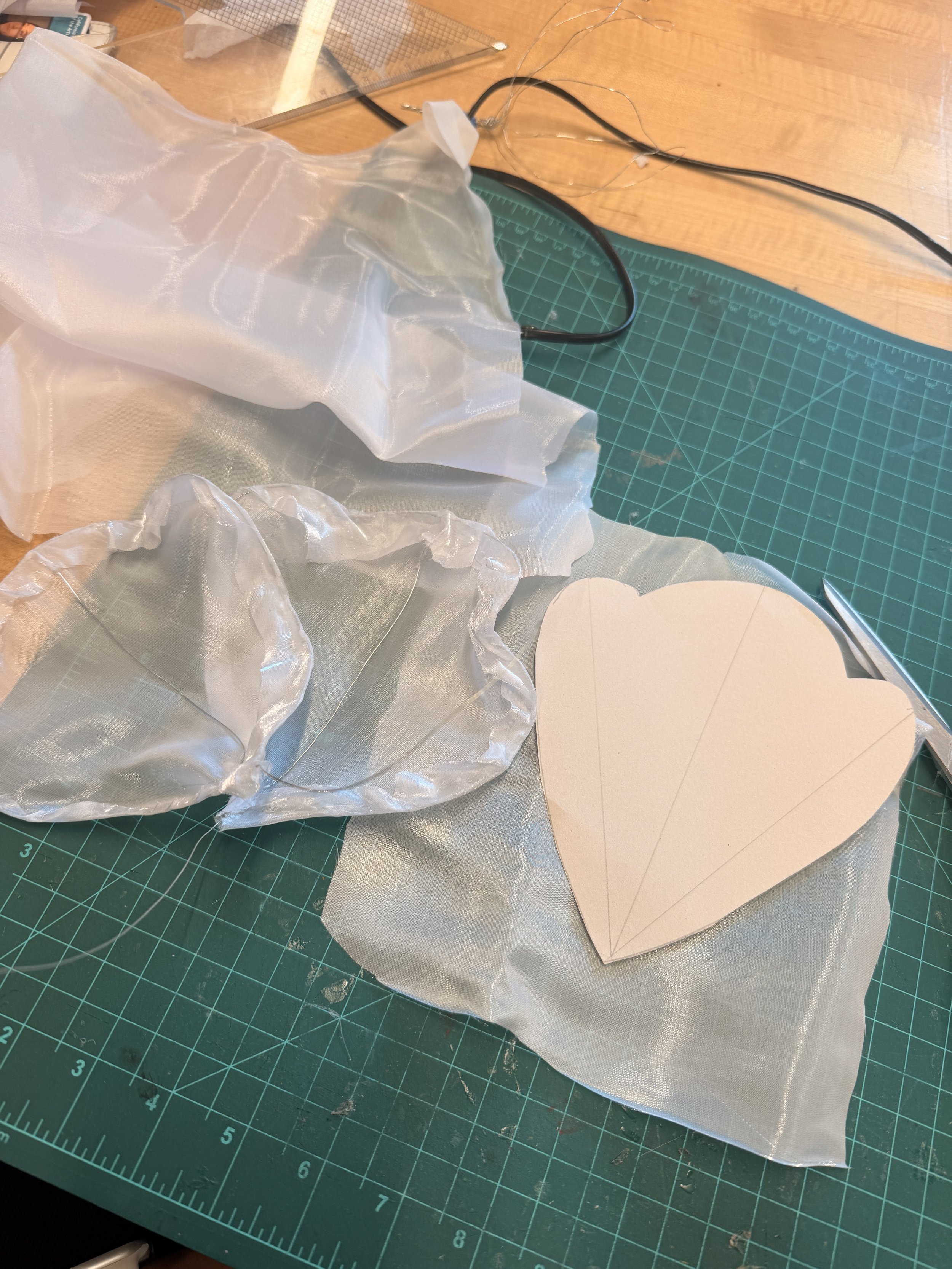
During the initial prototyping stage, I experimented with PLA plastic and translucent plastic film. These materials offered moderate flexibility and structural stability, but required rigid mechanical components to support and secure each moving section. This added visual and mechanical complexity, while the materials’ limited light diffusion reduced the clarity and softness of the projected imagery.
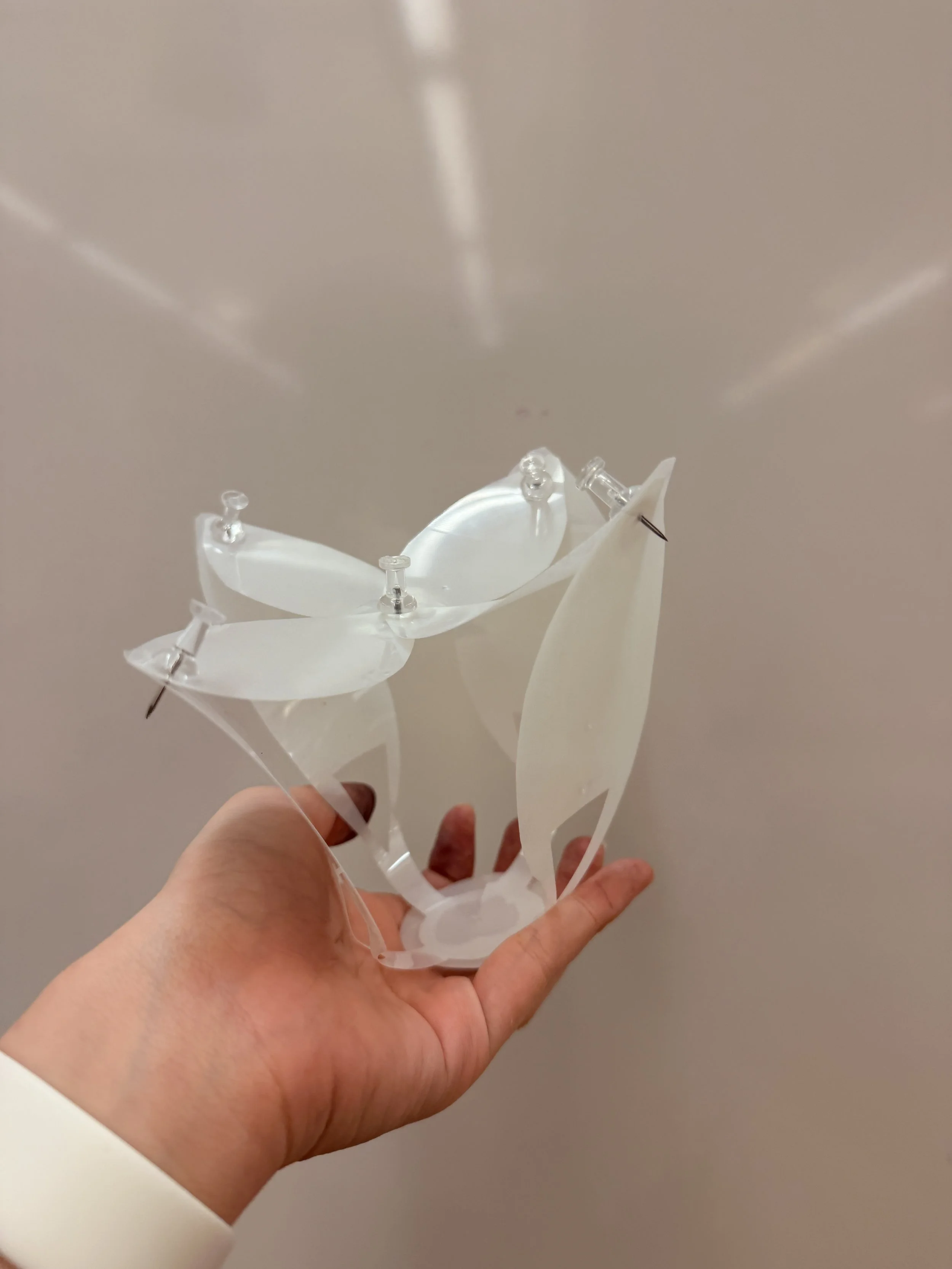
After evaluating key properties—including light transmission, diffusion, flexibility, and extensibility—I selected organza as the primary material for the flower body. Its lightweight, translucent structure produces a softer visual effect while allowing the petals to move naturally with the servo-driven mechanism
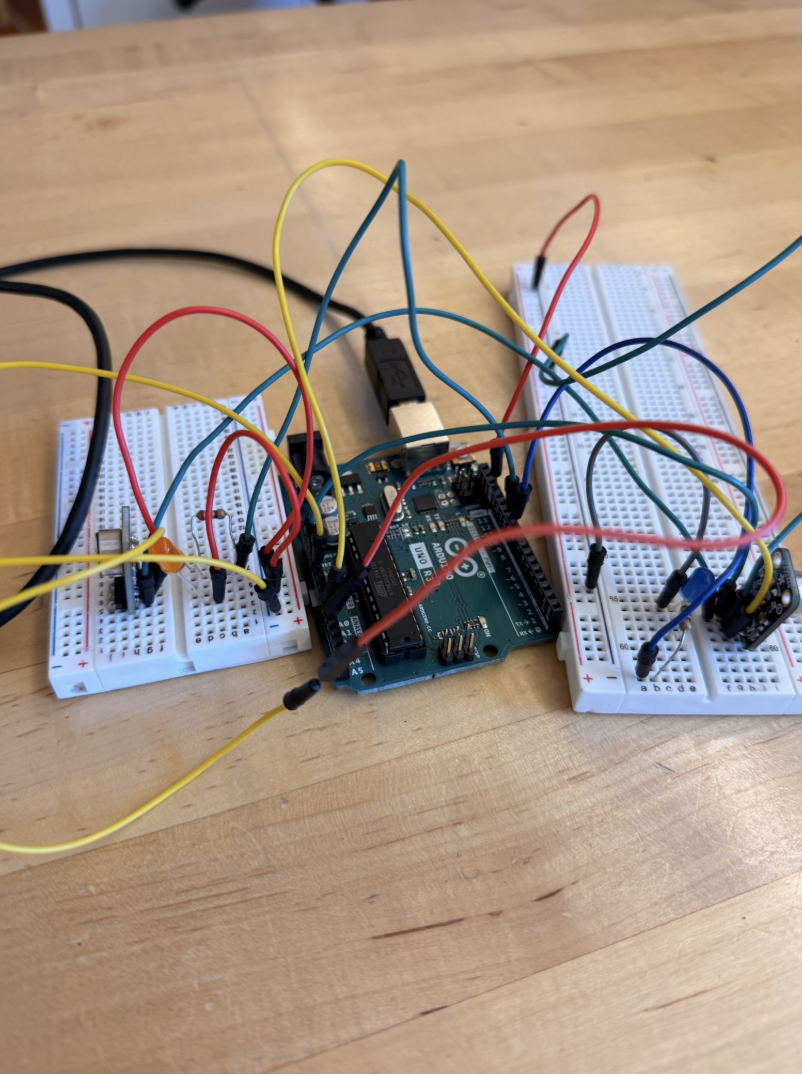
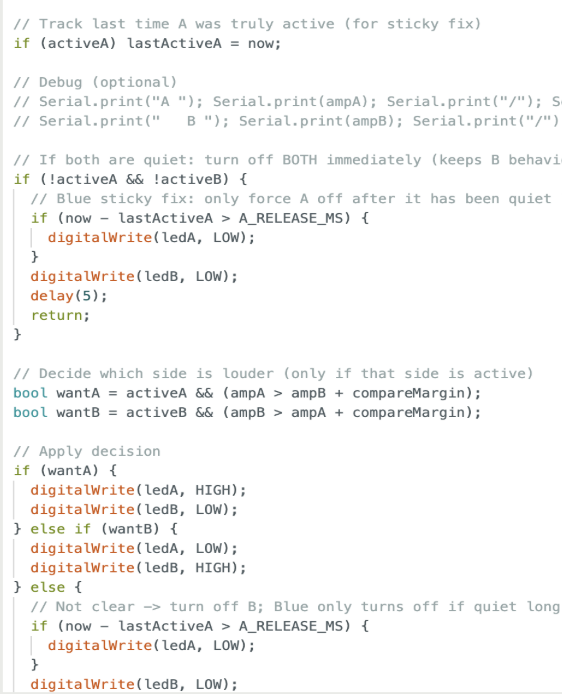
Early Arduino & API Testing
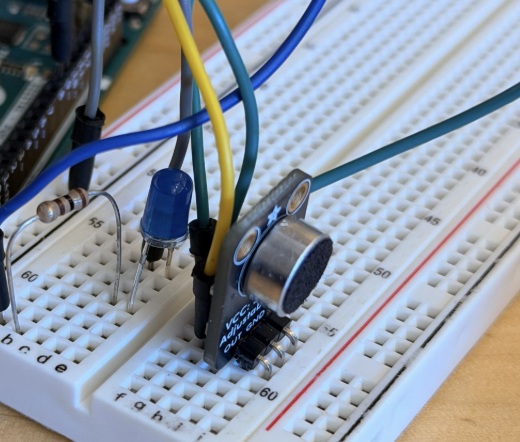
In this test, I examined the functionality of the microphones: how two microphones can detect and differentiate a person’s voice; from what distance a person’s voice can be detected; and how far apart the microphones need to be placed to avoid interference or confusion between inputs.
What’s Next: Supporting Autistic Children
The next stage explores how this system could support emotion recognition and communication for autistic children. By translating spoken language into simple visual and physical responses, the interactive flower may help children identify emotional cues, express their feelings, and understand the relationship between language and emotion.
Why I Created This Project
This project transforms invisible emotional signals into visible, physical responses.
Originally titled Bias & Favoritism, this project began as an exploration of how bias appears in everyday interactions. Bias is not always expressed through direct discrimination; it can also emerge through subtle language, tone of voice, body language, and unconscious behavior.